A Point of Sale (POS) system is software that manages every step of the sales process, from taking orders and processing payments to issuing receipts, summarizing sales figures, and analyzing business data.
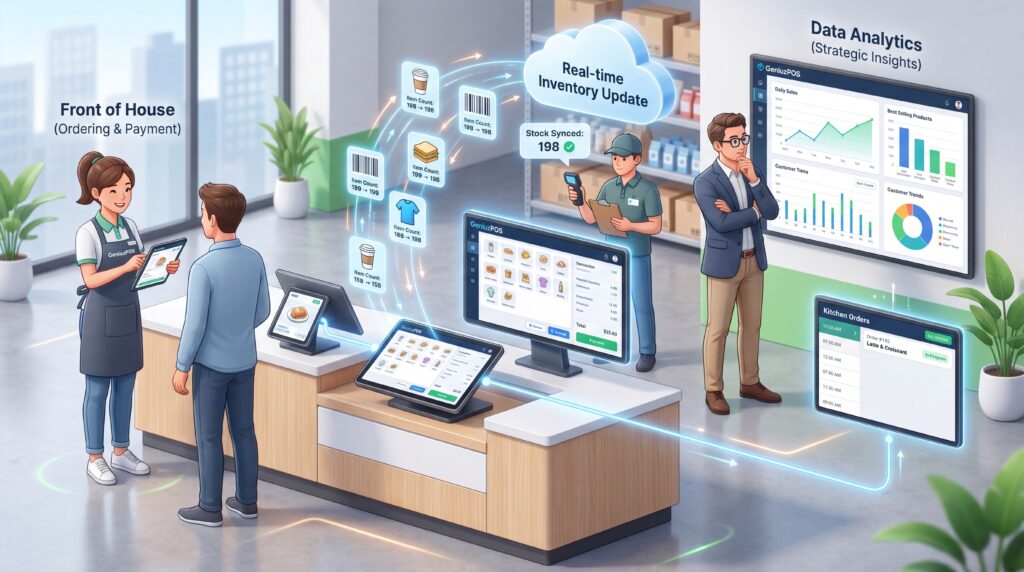
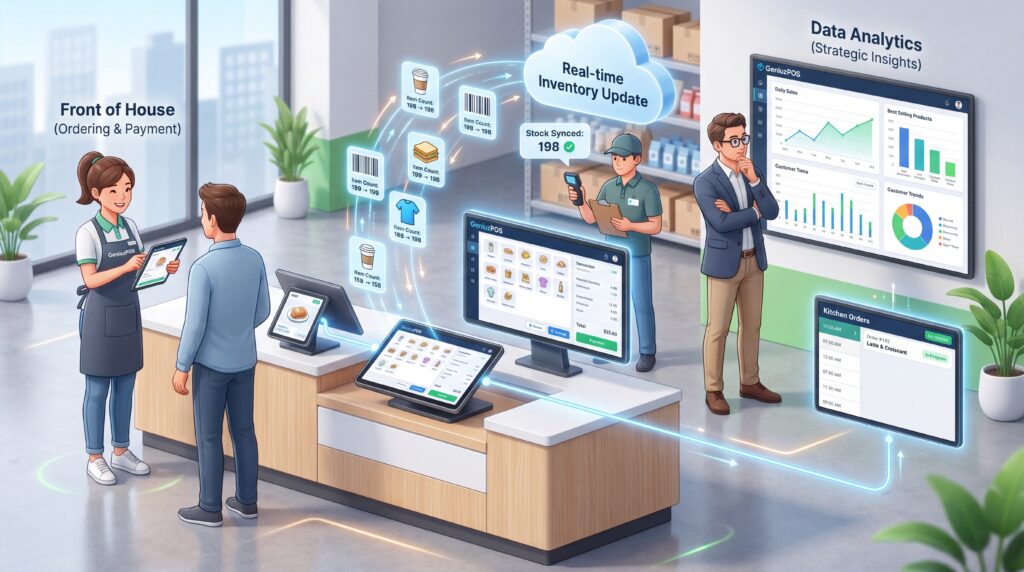
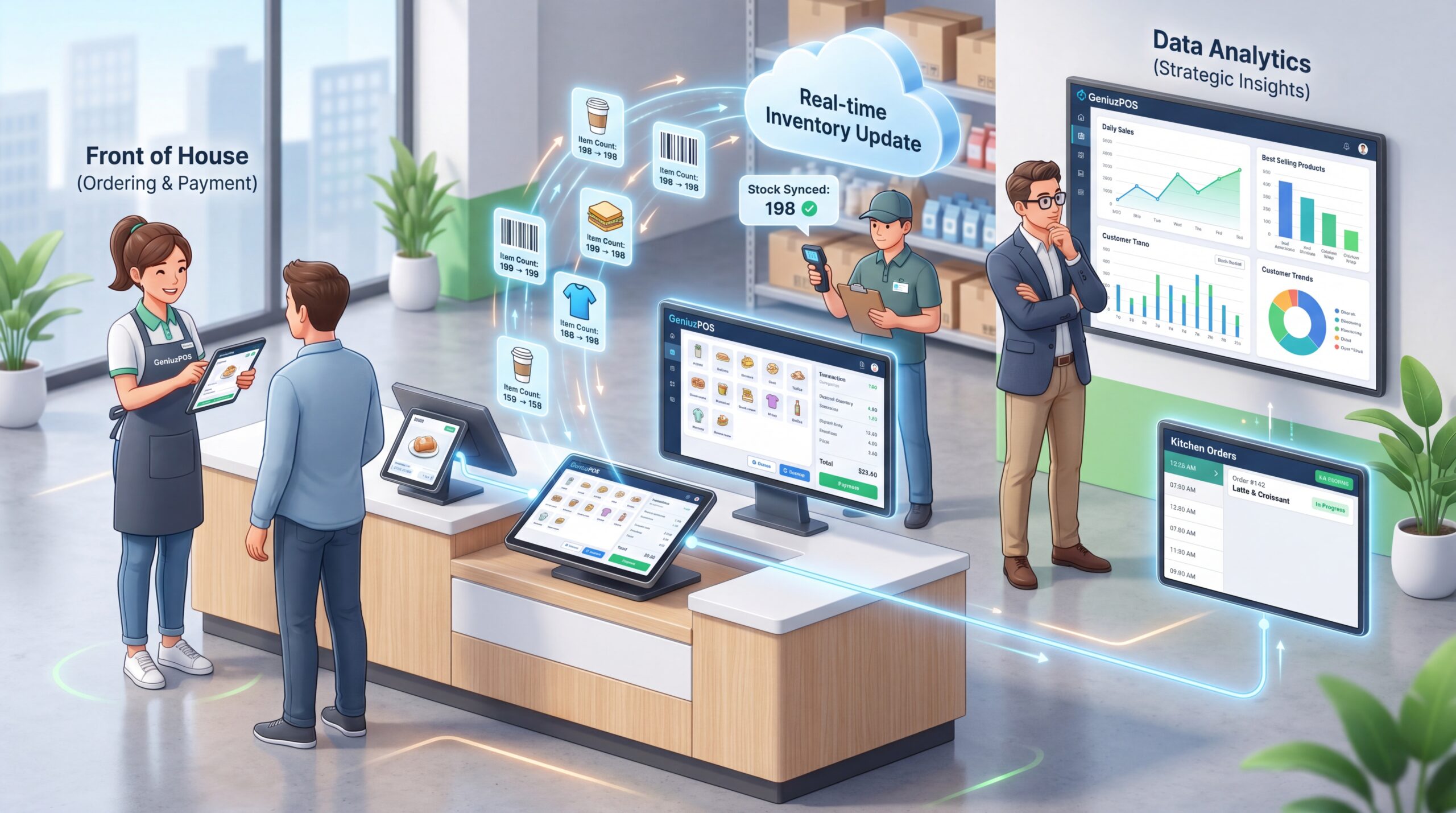
To illustrate this more broadly, a POS (Point of Sale) is not just a tool for “receiving payments,” but rather functions as a store control center, automating all processes together.
Starting at the front of the store, when an employee receives an order through the system, the information is immediately sent to the kitchen or relevant department, reducing errors from traditional communication. The system then automatically calculates the price, tax, discounts, or promotions, making payment faster and more accurate.
Meanwhile, every sale is recorded in the system in real-time, not only for issuing receipts to customers but also for automatically updating inventory. For example, when one item is sold, the system immediately deducts the quantity from the inventory, helping store owners know when items are running low and plan their reorders efficiently.
In addition, POS systems serve as business analytics tools, collecting all sales data and summarizing it into reports such as daily and monthly sales figures, best-selling products, peak customer times, and even customer purchasing behavior. This data helps business owners make more accurate decisions, whether it’s about promotions, inventory management, or marketing planning.
In other words, POS (Point of Sale) transforms “ordinary sales data” into “strategic data” that helps businesses grow in a focused direction, not just by selling, but by selling smarter.